
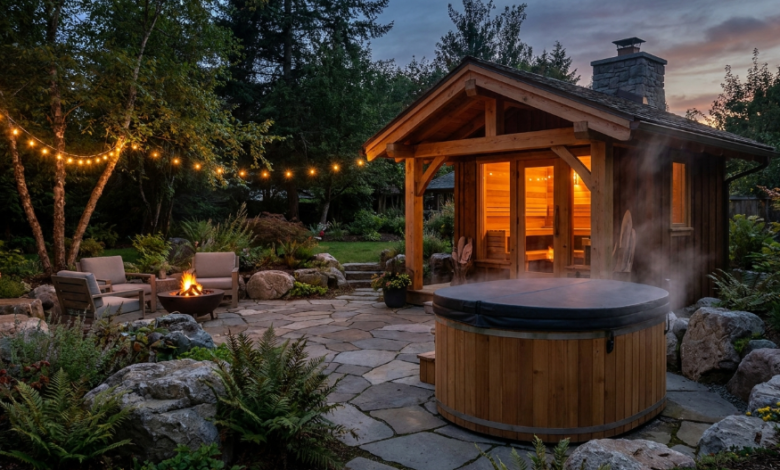
Cedar and heat-treated hemlock are the two wood species homeowners choose between most often, and the decision usually comes down to where the sauna will sit and how long the household plans to keep it. Cedar costs roughly 20 to 30 percent more but shrugs off moisture and holds its finish for years outdoors with minimal upkeep. Heat-treated hemlock costs less and performs well in a finished basement, garage bay, or other indoor space where humidity swings are smaller. Neither wood is a wrong answer for a home installation; the right one depends on the spot in the house or yard where it will actually live.
Where in a Home Does Each Wood Perform Best?
An outdoor backyard sauna faces direct sun, rain, freeze-thaw cycles, and snow load depending on climate, and cedar’s natural oils are what let it shed that kind of exposure without rotting or warping the way a lesser wood would over a decade. An indoor sauna built into a basement corner, mudroom, or converted closet lives in a much gentler environment, since the surrounding house structure buffers temperature swings and the wood only faces heat and steam during actual sessions. In that indoor setting, heat-treated hemlock’s slightly lower natural resistance matters far less, which is why so many indoor conversions default to hemlock as the practical, budget-friendly choice.
What Does the Cedar Premium Actually Buy a Homeowner?
The extra 20 to 30 percent a household pays for cedar goes toward oils that resist rot and moisture absorption without any sealant reapplication for the first several years, plus a scent that most people associate with a genuine sauna experience the moment they open the door. For a family planning to keep a backyard unit for fifteen or twenty years with minimal maintenance calls, that premium tends to pay for itself in avoided resealing labor alone. For a household planning to sell the house within five years or move the sauna indoors eventually, the premium buys less practical value and starts to look more like a cosmetic upgrade. Homeowners comparing current cedar and hemlock cabin pricing side by side can check listings from Sweat Decks, which states species and grade on each model page rather than using vague marketing language.
How Does Each Wood Hold Up to Daily Family Use?
A sauna that gets used by two or three household members most days of the week goes through far more heat and moisture cycles than one used occasionally, and panel stability under that kind of repeated stress is where both species earn their reputation. Cedar’s track record under daily cycling, particularly outdoors, is longer and better documented than hemlock’s, largely because it has been used in sauna and exterior construction for longer. Heat-treated hemlock holds up well under daily indoor use too, provided the kiln-drying was done correctly before milling, though buyers should ask a seller directly about the drying process rather than accepting a vague “premium wood” label at face value.
Does the Choice Change Home Insurance or HOA Considerations?
Most homeowners insurance treats an outdoor sauna as a detached structure or a permanent fixture depending on how it is anchored, and that classification usually cares about square footage, electrical work, and foundation type rather than wood species. Homeowners associations that restrict outdoor structures sometimes have rules about visible materials or finish color, which is worth checking before ordering either wood, since a natural cedar tone reads differently from a distance than a stained or painted hemlock exterior. Neither wood typically changes a policy premium on its own, but any dedicated electrical circuit added for the heater should be reported to an insurer regardless of which species sits around it. It is worth pulling the actual policy language before ordering rather than assuming a sauna falls under an existing outbuilding allowance, since some carriers cap coverage on detached structures at a flat dollar figure that a fully equipped cedar cabin can exceed once the heater, wiring, and foundation work are added together.
What Do Homeowners Notice a Year or Two In?
Owners of cedar backyard units generally report the wood graying slightly if left unsealed, a cosmetic change some households like and others choose to prevent with an annual UV-rated sealant coat. Owners of indoor hemlock cabins more often mention that the wood’s lighter, more uniform tone brightens a small room compared with darker cedar, which some homeowners specifically prefer for a windowless basement space. Both groups report similar satisfaction with heat retention and comfort once the unit is broken in, which suggests that for indoor use in particular, the practical difference between the two woods is smaller than the price gap implies. A handful of households that moved from an old, unsealed cedar unit into a newer hemlock cabin during a renovation reported barely noticing the switch in day-to-day comfort, though several did mention re-oiling the bench slats sooner than they had with cedar.
What Does the Broader Research Say About Regular Sauna Use?
None of the available research separates health outcomes by wood species, since studies track sauna bathing habits generally rather than cabin construction. A 2018 review in Mayo Clinic Proceedings and a 2001 review in The American Journal of Medicine both describe cardiovascular associations tied to regular sauna use across study populations, independent of what the cabin is built from. A 2023 follow-up review, also in Mayo Clinic Proceedings, looked at sauna bathing alongside other lifestyle habits and found the association held up as part of a broader healthy-living pattern rather than in isolation. What wood species actually influences is how long a home sauna stays in good working order, and a unit that lasts and gets used consistently is the one most likely to matter for a household’s routine.
Frequently Asked Questions
Is cedar worth the extra cost for a home sauna? For an outdoor unit facing weather, yes, since it needs less frequent sealing. For an indoor cabin in a basement or spare room, hemlock closes most of that gap.
Will a hemlock sauna smell as good as a cedar one? Not quite. Heat treatment lowers resin content, so the aroma is milder, which some households prefer in an enclosed indoor room.
Does wood choice affect resale value of a home? A well-built sauna of either species reads as a bonus amenity rather than a line-item buyers price separately. Build quality and installation matter more than species.
Can either wood be installed in a small home laundry room or closet? Both can work if ventilation and heater clearance requirements are met. Hemlock’s lower cost often makes it the practical pick for a compact indoor conversion.
References
- Cardiovascular and Other Health Benefits of Sauna Bathing: A Review of the Evidence, Mayo Clinic Proceedings, 2018
- Benefits and risks of sauna bathing, The American Journal of Medicine, 2001
- Does the Combination of Finnish Sauna Bathing and Other Lifestyle Factors Confer Additional Health Benefits? A Review of the Evidence, Mayo Clinic Proceedings, 2023

